

How to
Beyond the Lanyard: How to Get Measurable Value from Every Business Conference
Learn how to get more value from business conferences. Master pre-event outreach, strategic networking, and the 48-hour follow-up to maximize conference ROI.
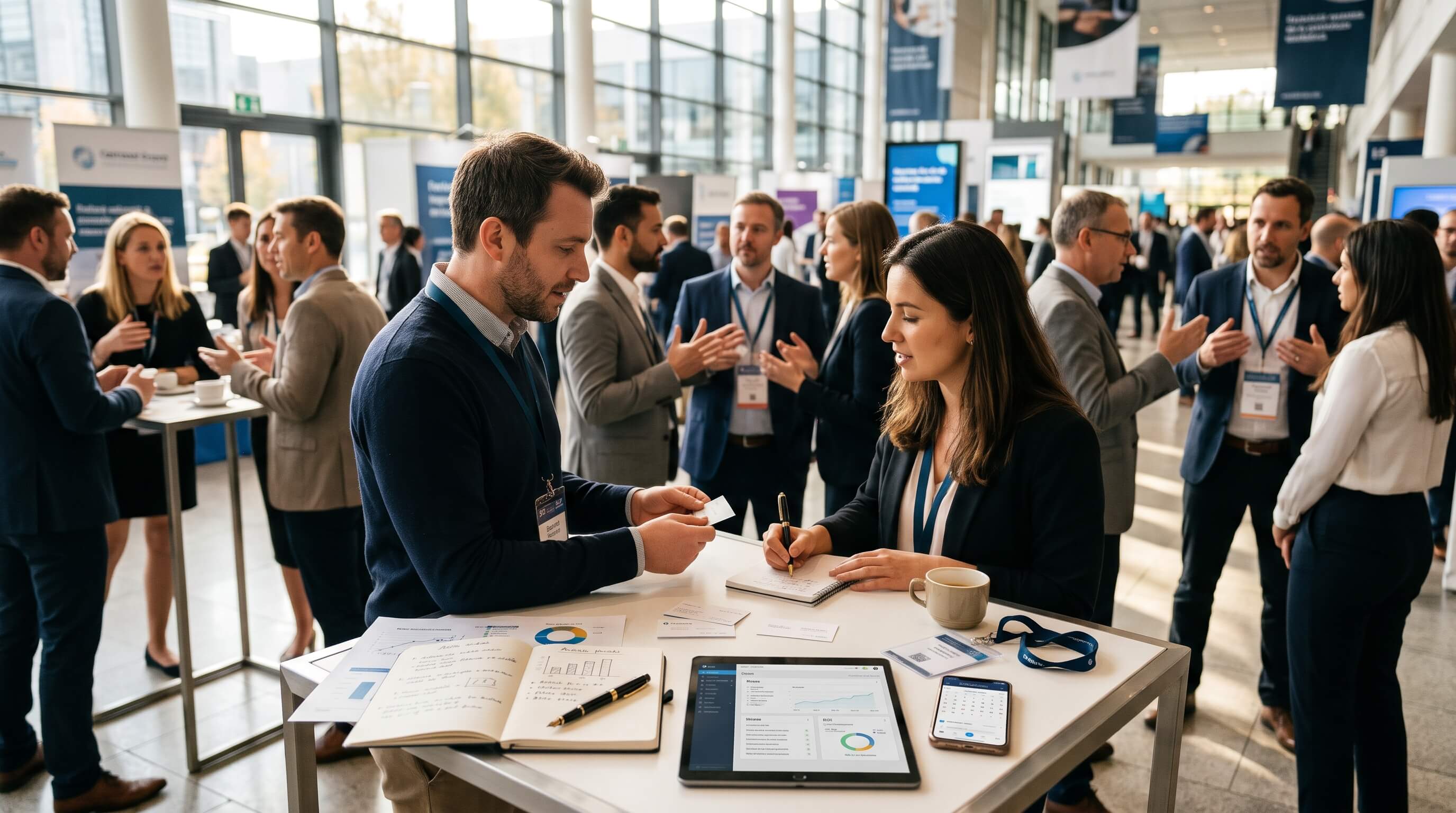
Attending a major business summit, trade exhibition, or industry forum represents a significant investment. Between delegate pass costs, travel logistics, and days spent away from your core operational desk, the true cost of attendance extends far beyond the price of your ticket.
Yet too many professionals treat conferences as passive experiences. They sit in darkened keynote halls collecting branded pens, wander expo corridors aimlessly, and return to the office with a stack of business cards that end up collecting dust in a drawer.
To generate tangible business outcomes—whether raising venture capital, closing high-value commercial accounts, or sourcing strategic suppliers—you must approach professional gatherings with an intentional commercial methodology. Here is a practical, step-by-step guide to maximizing your return on investment (ROI) at every business conference.
1. The Pre-Event Phase: Win Before You Arrive
The most productive conference attendees do 70% of their strategic networking before they ever set foot in the venue. Showing up expecting spontaneous high-value encounters is a gamble you don't need to take.
CONFERENCE PREPARATION CHECKLIST
+-----------------------------------------+
7 to 10 Days Before
- Review delegate app & speaker list
- Filter leads by vertical/decision
- Outreach on official event portals
48 Hours Before
- Lock 4 to 6 target meetings
- Reconfirm meeting locations
- Prepare digital business card
Leverage the Event App Early: Most modern summits launch official networking apps 2 to 3 weeks ahead of the opening date. Build your profile immediately, clearly outlining what your business provides and the exact partnerships you seek. Filter the attendee directory to identify 10 to 15 high-priority decision-makers.
Pre-Schedule 15-Minute Micro-Meetings: Rather than asking someone for a generic lunch or coffee, request concise 15-minute introductory meetings at a specific location on the floor (e.g.,"Let's meet at the Partner Lounge at 11:15 AM"). Short, structured conversations are far more likely to get accepted by senior executives.
Warm Up via Digital Channels: Connect with scheduled panelists and exhibitors on LinkedIn ahead of time. Engage with their pre-event posts or mention that you are looking forward to their specific session to build familiarity.
2. On the Ground: Curate Your Time with Precision
Exhibition centers are designed to be overwhelming. Without a plan, fatigue sets in by early afternoon.
Audit the Agenda Ruthlessly
Keynotes and panel discussions are valuable, but recordings or slide decks are often available to registered attendees post-event. If a scheduled keynote clashes with a confirmed meeting with a qualified prospect or investor, prioritize the personal meeting every time. Limit yourself to 2 or 3 high-impact sessions per day and dedicate remaining hours to transactional engagement.
Master the "Hallway Track"
Some of the most lucrative commercial conversations happen outside the conference auditoriums:
- The Perimeter Strategy: Position yourself near session exit doors or lounge entrances immediately after high-profile panels. Attendees and speakers often linger to discuss takeaways.
- Skip the Pitch: When meeting someone new, avoid launching into an unsolicited sales pitch. Ask open, diagnostic questions: "What brings your team to this year’s forum?" or "What is your biggest operational bottleneck right now?" Let them outline their pain points before positioning your solution.
3. Technology & Note-Taking: Capture Context in Real Time
Memory degrades quickly after dozens of brief conversations. Relying on business cards alone is a recipe for forgotten details.
- Use Digital Contact Solutions: Ditch paper cards for digital solutions like NFC contact cards (e.g.,Popl, Blinq) or direct LinkedIn QR code scans. This ensures contact details go directly into digital address books and CRMs.
- The Voice-Memo or Note Trick: The moment a conversation ends, step aside for 30 seconds to type a quick note or record a private voice memo on your phone noting:
- What they specifically care about.
- Any personal detail mentioned (travel plans, mutual contacts).
- The exact promised next step.
- What they specifically care about.
4. The Post-Event Execution: The 48-Hour Conversion Rule
The true value of a conference is realized after the event concludes. If you wait more than three or four days to reach out, your conversation gets buried under routine office work.
THE POST-CONFERENCE CONVERSION PIPELINE
+-------------------------------------------------+
Within 48 Hours
- Send personalized follow-up emails
- Reference specific talk points
- Connect across LinkedIn networks
Within 14 Days
- Deliver promised audits/assets
- Formalize introductory calls
- Log leads into corporate CRM
Personalized Outreach: Never send generic bulk follow-ups. Reference specific points from your conversation: "Great speaking about enterprise logistics near the main stage on Wednesday—wanted to share that resource we discussed".
Deliver Value First: Before asking for a contract or commercial commitment, send an insightful industry report, a warm introduction, or a relevant case study that addresses the problem they raised during your conversation.
5. Measure Your Conference ROI
To justify future marketing and travel budgets, quantify the outcome of your attendance using clear metrics:
Conference ROI = Pipeline Value or Secured Contracts - Total Attendance Costs X 100
Total Attendance Costs
Frequently Asked Questions
How many business meetings should an attendee aim to schedule per day?
Aim for 4 to 6 scheduled micro-meetings per day. Trying to book more often leaves zero buffer time for walking between expansive exhibition halls, managing unexpected overruns, or participating in spontaneous hallway conversations.
What is the biggest mistake attendees make at business conferences?
The most common mistake is behaving passively—attending presentations back-to-back without engaging fellow attendees or scheduling pre-booked meetings, and then failing to execute structured follow-ups within 48 hours.
Turn Attendance into Commercial Growth
Business conferences are commercial marketplaces. The attendees who gain the highest return do not leave their schedules to chance. By prioritizing pre-event outreach, treating every conversation as a diagnostic discovery, and executing disciplined follow-ups, you transform an ordinary badge into an engine for concrete business growth.
Share This Article
About the Writer

Ahmad Nasereddine
Founder & Editor-in-ChiefA digital entrepreneur and storyteller dedicated to bridging the gap between global innovation and the UAE’s vibrant lifestyle. With a worldview shaped by my roots in Lagos and Lebanon, I leverage a global perspective to highlight the visionary people and businesses driving our region forward. As a recipient of the 2026 Global Recognition Award™ and Best CEO Under 40, I am committed to evolving how we interact with media creating a smarter digital environment where both lifestyle and business thrive.